
WELCOME PACKAGE 400%
BONUS UP TO €3200 +
200 FREE SPINS
BONUS UP TO €3200 +
200 FREE SPINS
Home → Blackjack
Blackjack at Instant Casino: Variants, Rules and Payouts
Split, Double Down, and Surrender in Numbers
The Blackjack Split / Double / H17 variant allows for splitting hands up to four times and doubling down on any two cards, with doubling after a split also permitted. These rule modifiers affect the RTP, with 'Double After Split' improving it by approximately 0.14 percentage points compared to standard rules.
Blackjack Surrender, specifically Late Surrender, allows a player to forfeit half their bet after the dealer checks for blackjack, improving the RTP by about 0.08 percentage points. This is notably less beneficial than Early Surrender, which can reduce the house edge by up to 0.6 percentage points but is rarely offered.
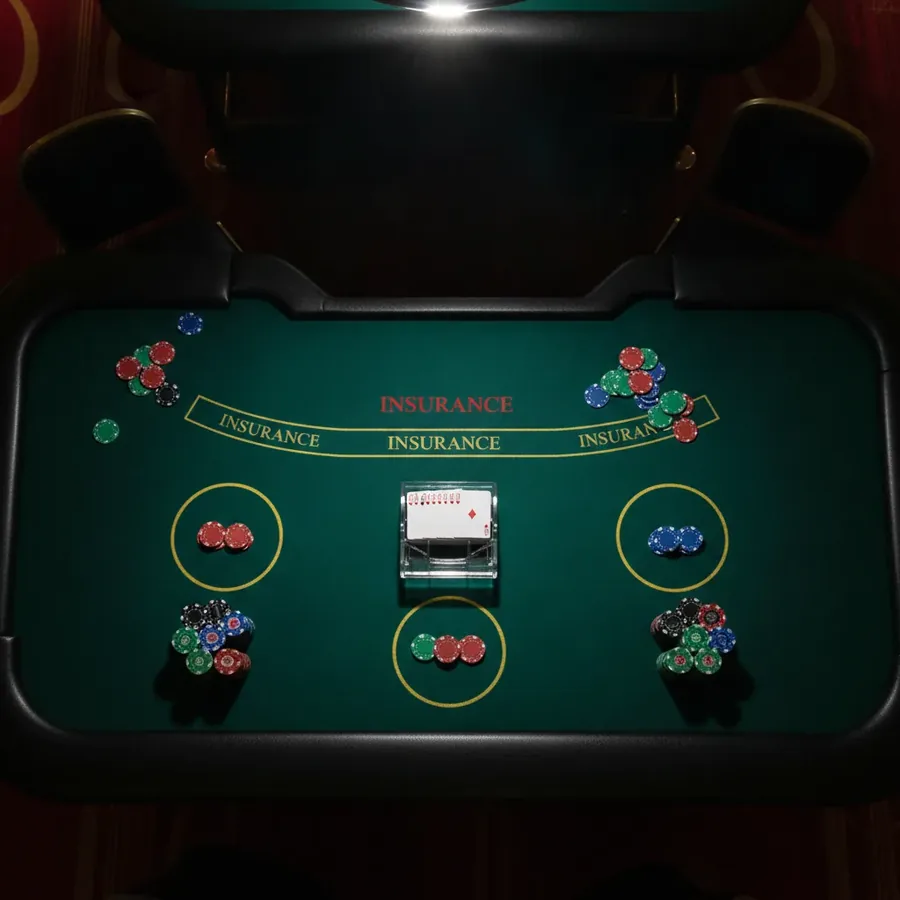
Insurance, a side bet against a dealer's ace, pays 2:1 but has a 7.47% house edge for an 8-deck shoe, significantly reducing long-term returns. Basic strategy dictates always declining this bet unless employing card counting with a True Count of +3 or higher.
No Double Down on three cards
In the Blackjack Split / Double / H17 variant, the option to double down is restricted to when a player holds two cards. This restriction is a common rule modification that impacts player strategy and the overall house edge.
The Blackjack Liberal Vegas Strip variant, featuring a 0.28% house edge, permits doubling down on any two cards. This rule, combined with S17, Resplit, and Late Surrender, contributes to its player-favorable RTP of 99.72%.
In contrast, a standard Blackjack game with S17, DAS, and DOA, offering a 99.54% RTP, also allows doubling down on any two cards. The absence of this option on three cards, as seen in some variants, directly increases the house advantage.
Seat change at the Live Table in 20 seconds
Quantum Blackjack Plus Live, a variant from Playtech, allows bets from 1 to 5,000 EUR and offers Quantum multipliers up to 1,000x on specific three-card 21s. The optimal strategy RTP for this game is 99.57%.
Infinite Blackjack by Evolution provides an unlimited number of player seats, enhancing accessibility. It also features four side bets: Any Pair, 21+3, Hot 3, and Bust It, with an RTP of 99.47% under optimal strategy.
Blackjack Party, also from Evolution, creates a lively atmosphere with two hosts and accommodates bets from 1.00 to 1,000 EUR. While not explicitly mentioning seat change times, the dynamic presentation suggests rapid player turnover.
How long do 100 EUR last at a 1 EUR table?
At a live Blackjack table with a 1 EUR minimum bet, a 100 EUR bankroll could theoretically sustain 100 rounds of play if no losses are incurred. This assumes each round involves a single 1 EUR bet.
Considering the house edge, for example, the 0.46% house edge in Blackjack 6 Decks, S17, DAS, DOA, would gradually deplete the 100 EUR over time. Over 100 plays at 1 EUR per hand, the expected average retention by the casino is 0.46 EUR.
The Blackjack Party variant accepts bets from 1.00 EUR to 1,000 EUR. Playing at the lowest stake of 1 EUR per hand, a 100 EUR balance would provide 100 betting opportunities before depletion, assuming no wins offset losses.
How many decks are in the shoe?
Blackjack Insurance is analyzed with an 8-deck shoe, yielding a 7.47% house edge. The number of decks significantly influences the house advantage, with fewer decks generally offering a lower edge for the player.
Blackjack 6 Decks, S17, DAS, Auszahlung 3:2, operates with six decks, presenting a 0.46% house advantage when basic strategy is applied. This configuration is more favorable than games using a larger number of decks.
A theoretical Blackjack game played with a single deck and classic rules, offering a 99.85% RTP, demonstrates the lowest house edge at 0.15%. This is approximately 0.48 percentage points lower than an 8-deck game, often compensated by less favorable payout ratios like 6:5.
Blackjack variants at a glance
| Variant | Payout | House edge | Rule | Bet range |
|---|---|---|---|---|
| Blackjack Auszahlung 6:5 statt 3:2 (6 Decks) | 98.15% | 1.85% | Ersatz von 3:2 durch 6:5 fügt exakt +1.39 Prozentpunkte zum Vorteil des Casinos hinzu – stärker als jede andere Regeländerung. Bei $10 Einsatz zahlt Blackjack $12 statt $15. | Blackjack 6:5, Gewinn 1:1 |
| Blackjack Insurance / Versicherung (6–8 Decks) | 92.53% | 7.47% | Separate Nebenwette bis 50% der Hauptwette, wenn der Dealer ein Ass hat. Basisstrategie schreibt IMMER Ablehnung vor (außer Karten zählen bei True Count ≥ +3). Bei einem Deck Vorteil ≈ 5.88% | Insurance 2:1 |
| Blackjack Split / Double / H17 – Regel-Effekte | n.a. (Regel-Modifikatoren) | H17 +0.22 Prozentpunkte; RSA −0.08 Prozentpunkte; DAS −0.14 Prozentpunkte | Dealer Hits Soft 17 verschlechtert RTP um 0.22 Prozentpunkte; Resplit Aces verbessert um 0.08 Prozentpunkte; Double After Split verbessert um ca. 0.14 Prozentpunkte; 6 Decks statt 8 – ca. 0.02 Prozentpunkte. | Double – Einsatz ×2 mit einer Karte; Split – bis 4 Hände; Ass-Split meist mit einer Karte. |
| Blackjack Ein Deck, klassische Regeln, 3:2 | 99.85% | 0.15% | Weniger Decks = niedrigerer Vorteil; ein Deck gibt ca. −0.48 Prozentpunkte gegenüber 8 Decks. Oft durch 6:5 Auszahlung kompensiert. | Blackjack 3:2, Gewinn 1:1 |
| Blackjack Liberal Vegas Strip (liberale Regeln, 3:2) | 99.72% | 0.28% | Günstigste Regelkombination: S17 + DAS + Resplit + Late Surrender. Standardabweichung 1,15 | Blackjack 3:2, Gewinn 1:1 |
| Blackjack 6 Decks, S17, DAS, DOA, Auszahlung 3:2, Basisstrategie | 99.54% | 0.46% | Dealer steht auf Soft 17; Verdopplung auf jeder Zweierkarte; Verdopplung nach Split erlaubt; keine Aufgabe. Basisstrategie ist für diesen Wert zwingend | Blackjack 3:2, normaler Gewinn 1:1, Insurance 2:1 |
Blackjack Contributes Only 10 Percent to Wagering
Table games, including Blackjack variants, contribute only 10% towards fulfilling wagering requirements on bonuses. A welcome bonus of 300% up to €2,000 requires €40,000 turnover for every €1,000 deposited if only playing Blackjack.
This contrasts with Slots, which contribute 100% to wagering. Therefore, to meet a €40,000 wagering requirement through Blackjack alone, a player would need to wager €400,000 in total.
For example, wagering €100 on Blackjack would count as €10 towards the requirement, while wagering €100 on Slots would count as the full €100, making bonus clearance significantly faster on Slots.
Blackjack Payout 3:2 Explained in Detail
A standard Blackjack payout of 3:2 offers a superior return compared to other variants. For instance, a €100 bet yielding a Blackjack hand would pay out €150, providing a €50 profit on that specific hand.
This payout structure is present in 'Blackjack Liberal Vegas Strip', which boasts a high RTP of 99.72% due to favorable rules like dealer standing on soft 17 and double after split. This is superior to the 6:5 payout.
In contrast, a Blackjack payout of 6:5, as seen in some 6 Deck variants, would only pay €120 for a €100 bet. This difference of €30 per winning Blackjack hand significantly increases the house edge by 1.39 percentage points.
Splitting costs double bet: plan budget
The 'Split' action in Blackjack typically requires doubling the initial bet, as a new hand is formed from the split cards. This means a €10 bet placed at a table like Infinite Blackjack or Blackjack Party would become €20 if a split occurs.
This rule is standard across most Blackjack variants, including those with liberal rules like 'Blackjack Liberal Vegas Strip', where splitting up to four hands is permitted. Players must be prepared for their potential stake to double mid-hand.
When considering budget allocation for live dealer Blackjack, it's crucial to factor in the possibility of splitting. For a player with a €1,000 bankroll aiming for a modest €10 per hand bet, a split would immediately increase their exposure to €20 per hand.
What Hole Card Means at a Live Table
The concept of a 'hole card' is fundamental to live dealer Blackjack, referring to the dealer's second card, which is dealt face down. This card is crucial for determining the dealer's hand strength and the player's strategic options.
In games like 'Blackjack 6 Decks' with the rule 'Dealer stands on Soft 17' (S17), knowing the potential value of the hole card informs decisions such as hitting, standing, doubling, or splitting. The RTP for this variant is 99.54%.
The presence of the hole card is directly relevant to the 'Insurance' side bet, which is only offered when the dealer's visible card is an Ace. The potential value of the hole card significantly impacts the odds of the dealer achieving Blackjack.
Insurance Pays 2:1 Yet Still Costs Money
The 'Insurance' side bet in Blackjack pays at odds of 2:1, a seemingly attractive payout. This bet is made when the dealer's upcard is an Ace, and it essentially covers the player's main bet against the dealer getting a Blackjack.
Despite the 2:1 payout, 'Blackjack Insurance' carries a substantial house advantage of 7.47% in games using 6-8 decks, significantly higher than the main game's typical house edge. This means statistically, the player loses money over time.
Basic strategy dictates that players should always decline the insurance bet unless they are card counting and the true count is sufficiently high. Even with a 2:1 payout, the expected value of this side bet is negative for the average player.
One Deck vs Eight Decks in House Edge
Blackjack Ein Deck, featuring classic rules and a 3:2 payout for a blackjack, offers a superior RTP of 99.85%, resulting in a house edge of only 0.15%. This is significantly lower than the typical house edge found in multi-deck games. The reduction in decks directly impacts the casino's advantage, with one deck decreasing the edge by approximately 0.48 percentage points compared to an eight-deck game. This lower house edge translates to potentially better returns for the player over the long term.
Conversely, a game utilizing six decks, such as the Blackjack 6 Decks variant with S17, DAS, DOA rules and a 3:2 payout, presents an RTP of 99.54% and a house edge of 0.46%. While still competitive, this edge is nearly triple that of the single-deck version. The difference in house edge between 0.15% and 0.46% can accumulate over extended play. Players seeking the absolute lowest house edge should prioritize single-deck variations when available.
The financial implication of playing a game with a higher house edge is substantial. For instance, a Blackjack Auszahlung 6:5 variant, even with six decks, sees its RTP drop to 98.15% with a corresponding house edge of 1.85%. This increase of 1.39 percentage points solely due to the payout reduction means a $10 winning blackjack pays $12 instead of $15, highlighting the critical impact of rule variations on the casino's advantage. Players should always verify the blackjack payout before commencing play.
Even Money only possible with Dealer Ace
The concept of 'Even Money' in blackjack, a payout of 1:1 on a player's initial bet when they achieve a blackjack, is typically only offered when the dealer also possesses a blackjack. This scenario is fundamentally tied to the dealer's upcard. When the dealer's visible card is an Ace, the possibility of them holding a blackjack increases, prompting the option for the player to take Even Money. This payout is distinct from the standard 3:2 or 6:5 payout for a natural blackjack if the dealer does not have a blackjack.
Blackjack Insurance, a side bet offered when the dealer's upcard is an Ace, pays 2:1. However, this bet carries a substantial house edge of 7.47% in a 6-8 deck game, with an RTP of 92.53%. The optimal strategy for most players, barring card counters with a true count of +3 or higher, is to always decline this insurance. The statistical disadvantage of this bet makes it a detrimental choice for the vast majority of players seeking to maintain their bankroll.
The decision to offer Even Money is directly linked to the dealer's potential to achieve a blackjack, which is most likely when their upcard is an Ace. For example, in Blackjack Ein Deck, a natural blackjack pays 3:2, but the option for Even Money is contingent on the dealer revealing an Ace and subsequently showing a blackjack. This mechanic ensures that the casino maintains its edge by offering a slightly reduced payout in a specific, high-probability blackjack scenario for the dealer. Understanding this nuance is crucial for players.
16 vs. 10 played incorrectly: most common error
A frequently observed suboptimal play in blackjack involves a player choosing to hit when holding a total of 16 against a dealer's upcard of 10. This decision significantly increases the house edge. While the player's hand is precarious, standing on 16 against a 10 is statistically the correct play according to basic strategy, despite the risk of busting. Hitting this hand is one of the most common and costly mistakes made by novice players.
The Blackjack Liberal Vegas Strip ruleset, which includes S17, DAS, Resplit, and Late Surrender, offers an RTP of 99.72% with a house edge of 0.28%. This favorable environment is undermined by incorrect play, such as hitting 16 against a 10. The statistical advantage of the casino widens considerably when basic strategy deviations occur. Even in a liberal game, poor decisions can lead to a substantially higher effective house edge for the individual player.
When a player incorrectly hits a 16 against a dealer's 10, they significantly increase the probability of busting. The dealer's 10 upcard indicates a strong possibility of the dealer holding a hand of 17 or higher. Choosing to hit a 16 in this situation can lead to a loss of the entire bet. Conversely, standing on 16, while risky, aligns with basic strategy aimed at minimizing losses against a strong dealer upcard. This common error highlights the importance of adhering to mathematically derived strategies.
Six Card Charlie Pays Immediately with Six Cards
The 'Six Card Charlie' rule, a bonus payout condition, mandates that a player automatically wins if they accumulate six cards without busting. This payout is often immediate, regardless of the dealer's hand. This rule provides a distinct advantage to the player by offering a secondary win condition. It is a feature found in some blackjack variants, though not universally applied across all tables. The presence of this rule can influence a player's decision-making process.
For instance, a standard game like Blackjack Ein Deck has an RTP of 99.85%. The addition of a Six Card Charlie rule would theoretically improve this RTP further by creating a new way to win without additional risk to the player's initial bet, as long as they do not bust.
The immediate payout for a Six Card Charlie means that a player holding six cards without exceeding 21 secures a win, often at a 1:1 ratio, similar to a regular player blackjack. This contrasts with standard gameplay where the outcome is determined by comparing hands with the dealer after all player actions are complete. This rule acts as a built-in bonus, rewarding players for skillful navigation of card accumulation without busting. It is a significant deviation from traditional blackjack objectives.
Side Bets don't count towards bonus turnover
Wagers placed on side bets in live dealer blackjack games do not contribute towards fulfilling the wagering requirements of any active bonus. This is a standard condition across many online casinos, including those offering games like Infinite Blackjack or Quantum Blackjack Plus Live. The bonus turnover calculation typically only includes bets placed on the main blackjack hand. Players aiming to clear bonus funds must focus their betting activity on the primary game.
The welcome bonus of 300% up to €2,000, along with 100 free spins, has specific wagering terms. Table games, including blackjack, contribute only 10% towards the bonus turnover requirement. This means that any bets placed on side bets within these table games, even if they were to count, would contribute even less due to their exclusion. For example, a €10 bet on a side bet would effectively contribute €0 to the wagering requirement.
Players should be aware that betting on side bets like those found in Infinite Blackjack, such as Any Pair, 21+3, Hot 3, or Bust It, will not aid in clearing the bonus. To satisfy the wagering requirement of x40 on the bonus, a player would need to wager significantly more if they were only betting on side bets, which is not possible as they are excluded. For a €2,000 bonus, a total turnover of €80,000 is required, and only main game bets contribute to this figure.
Contact
Live - online chat
Banking









Providers












instant casino
2025